

Sealcoating Myths Michigan City Homeowners Should Stop Believing

When you live near Lake Michigan, your driveway gets hit with the whole weather package—UV in the summer, salt and freeze–thaw in the winter, and plenty of plow abrasion in between. That’s why sealcoating isn’t just a “looks nice” upgrade. Done right and on the right schedule, it’s a simple way to slow oxidation, keep water out, and stretch the life of your asphalt.
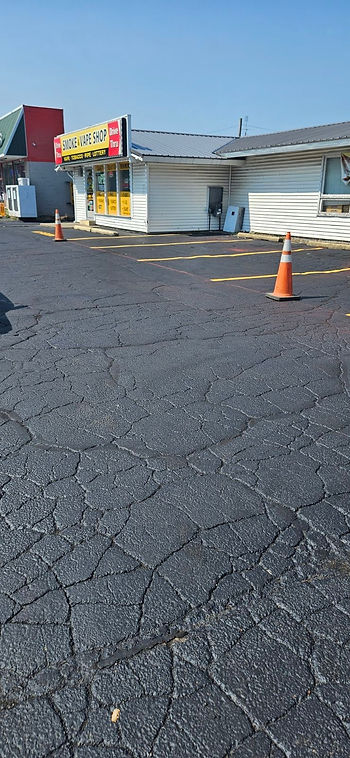
Still, we hear the same myths every week around Michigan City, La Porte, and the surrounding neighborhoods—myths that cost homeowners real money because they delay basic protection until little cracks turn into real repairs. Let’s clear the air so you can make a smart, low-stress plan for your driveway.
Myth # 1: “Sealcoating is just paint. It doesn’t actually protect anything.”
Reality: Professional sealers are engineered coatings. They’re formulated to shield asphalt binders from UV, oxygen, moisture, and de-icing chemicals. Think of it like sunscreen and a raincoat for your driveway.
As asphalt ages, the binder oxidizes and gets brittle; aggregate loosens; fine cracks appear; water finds a way in; and freeze–thaw does the rest. A good sealer creates a tight, uniform surface that slows oxidation and reduces water penetration. Will it stop every crack? No. But it dramatically slows the rate of aging—especially when paired with timely Crack Filling.
Michigan City tip: Lake-effect winters are tough on binder. If your driveway faces south with all-day sun, you’ll see oxidation even faster. Those are the jobs that benefit most from staying on a steady sealcoat cadence.
Myth # 2: “I should sealcoat every single year.”
Reality: More isn’t always better. Over-sealing can create slippery surfaces, trap moisture, and hide emerging issues you want to catch early. Most residential driveways do best on a 2–3 year cycle, depending on sun exposure, traffic, and whether cracks are being filled promptly.
If a contractor pushes a strict “every year or else” program without inspecting your surface first, that’s a red flag. We’ll tell you if you can wait a season—and we’ll say it in writing.
Rule of thumb: If the surface has good color, minimal raveling, and tight hairlines that have been filled, you can usually extend to the 3-year mark. If it looks dry/gray, is starting to shed aggregate, or shows new fine cracking, it’s time.
Myth # 3: “Sealcoating fixes cracks.”
Reality: Coating is not crack repair. It’s a protective film that flows over the surface; it doesn’t bridge movement. If you skip crack filling and just apply sealer, the coating will telegraph the crack pattern within months, and water will still get in.
The long-life combo is simple: clean → hot-applied crack seal → cut & patch (if needed) → sealcoat. Crack filling keeps water out of the base; sealcoat protects the surface from UV and moisture intrusion. Reverse the order, and you’ve paid for a pretty surface that still leaks.
Where we see this locally: Edges. Water sits along the grass line, softens the shoulder, and little edge cracks quickly unravel. We prep edges, fill those hairlines, and sometimes recommend a compacted shoulder so the edge can actually shed water.
Myth # 4: “Sealcoating is just for looks.”
Reality: Appearance is part of it—curb appeal matters—but the functional wins pay the bills. A uniform, sealed surface:
Slows oxidation so the asphalt stays flexible longer.
Improves water runoff by tightening pores and reducing raveling.
Reduces salt intrusion and staining, especially important near the lakeshore.
Makes it easier to spot issues (new cracks, depressions) so you can fix them while they’re small.
For commercial lots, there’s a safety and liability angle too: freshly sealed, high-contrast surfaces pair with crisp striping to guide traffic. But even at home, smoother, tighter surfaces plow and shovel better in winter.
Myth # 5: “DIY sealer from the big box is the same as pro coatings.”
Reality: Not even close. Professional crews have access to commercial blends that are properly mixed, agitated, and adjusted for temperature, humidity, and substrate condition. We add the right amount of sand for traction and wear, and we control application rate so you don’t end up with puddling or thin spots.
DIY pails often go on too thin, without sand, and over dirty surfaces. They can look blotchy, wear quickly, and sometimes cause adhesion problems that have to be scrubbed off before a real coat can go down. By the time you buy tools, do surface cleaning, and spend your weekend, the “savings” aren’t what you expected.
Myth # 6: “Sealcoating will fill my birdbaths and low spots.”
Reality: Coating follows the surface; it doesn’t fix grading. If water already ponds, it will still pond (and now you’ve trapped water on the surface longer). The fix is patching or milling to eliminate the low spot, then sealing the repaired area. We’ll flag dips during the walk-through and show you options before any sealer comes out.
Local pattern to watch: Near garage aprons and sidewalk tie-ins. Small settlement creates shallow bowls that freeze into slick patches. We’ll reshape those before sealing so runoff moves where it should.
Myth # 7: “Any warm day works. Scheduling doesn’t matter.”
Reality: Temperature and cure times matter a lot. We want the surface and ambient temps in the right range, minimal wind-blown debris, and a dry forecast so the film forms correctly. We also plan your project around traffic loads—keeping cars off the surface until it’s truly ready.
Rushing a job just to “beat the rain” is how you end up with tracking, early scuffing, or uneven sheen. We’ll advise a window that balances your schedule with the coating’s chemistry, even if that means an early-morning or Sunday application.
Myth # 8: “Sealcoating will stop every new crack.”
Reality: It’s not a magic shield. Movement from poor base support, heavy loads, or freeze–thaw cycling can still create new cracks. But sealed surfaces resist water ingress and UV damage, which reduces the rate and severity of cracking. Combine sealcoating with good drainage, prompt Crack Filling, and sensible snow removal, and you’ll see the difference in how slowly issues develop.
What a professional sealcoat visit looks like (and why it lasts)
1) Inspection & prep plan
We walk the driveway, mark cracks, check edges and drainage, and talk about your traffic patterns (multiple drivers, trailers, RVs). If we see structural issues, we’ll propose repairs before coating.
2) Cleaning
We blow, broom, and sometimes pressure-wash. Oil spots get treated so the coating can bond. Loose aggregate is removed so it doesn’t create a gritty, weak film.
3) Crack filling & patching
Hot-applied crack seal goes in before sealer, and any potholes or raveled areas are patched. This is the minute you’re buying the most life—keeping water out of the base.
4) Mix design & application
We agitate coating thoroughly, set sand load and solids content, and apply at the right rate, typically two coats for residential driveways. We cut edges clean and protect walkways/garage doors.
5) Dry, cure, and reopen
We post re-entry guidance based on temperature, shade, and
airflow. You’ll get clear instructions so tires don’t scuff the film on day one.
Michigan City climate: why the schedule matters here
Sun + lake breeze: UV bakes exposed drives; wind can dry the surface unevenly—our crew stages coats and traffic control to accommodate.
Freeze–thaw: Tiny, unfilled cracks become water highways. Sealing without Crack Filling is leaving the front door open.
Winter ops: Plows and salt are hard on older, dry asphalt. A fresh seal in late summer or early fall gives you a smoother, tighter surface heading into winter.
How often should you sealcoat?
For a typical Michigan City home: every 2–3 years, with crack filling as needed each spring. High-sun exposure, frequent turning movements (tight driveways), or heavy vehicles might justify the short end of that range. Light-use, shaded drives often live happily on a 3-year cycle.
Pro move: Put a reminder on your calendar for a 10-minute spring inspection—walk edges, look for new cracks, and check for low spots after a rain. If you’re unsure, snap a photo and send it; we’ll advise whether you can wait or should schedule a coating window.
Cost, value, and timing
Sealcoating is one of the cheapest ways to protect asphalt per square foot. The value shows up in:
Fewer early repairs. Slower oxidation means less raveling and fewer edge failures.
Better resale. Fresh, uniform surfaces signal a cared-for property.
Smoother snow removal. Tight, sealed surfaces plow cleaner and reduce ice bonding.
Booking in late spring or late summer often gives the best combo of weather and scheduling flexibility. If you seal in the fall, mind the cure window before temps drop.
What about concrete?
Concrete doesn’t get sealcoated the same way asphalt does; it uses different penetrating or film-forming sealers and relies on good joint layout and drainage. If your concrete driveway shows corner spalls or joint deterioration, you’re looking at joint sealing and sometimes panel replacement, not asphalt sealcoating. We handle those, too—ask about our Concrete solutions if that’s your surface.
Maintenance calendar you can copy
Spring (after thaw):
Walk the drive, note new cracks, schedule Crack Filling.
Check downspouts/edges for ponding; fix grading if needed.
Mid-summer:
Oil-spot cleanup; touch-up patches if any; confirm your target seal window.
Late summer–early fall:
Sealcoating window; keep cars off until we give the green light.
Set a reminder for next spring’s inspection.
Free authoritative backlink (keep this in the post)
Add a short sentence like:
“Want a deeper look at why preservation works? See the Federal Highway Administration’s overview of pavement preservation strategies.”
Link it to: FHWA — Pavement Preservation Basics (highways.dot.gov)
https://highways.dot.gov/ → (navigate: Infrastructure → Pavements → Preservation)
It’s a credible, government source that reinforces the idea that preventive maintenance extends life—exactly what sealcoating and crack sealing are about.
(If you’d like a second option, you can also cite the Purdue Extension site for homeowner-friendly stormwater basics, which pairs nicely with the “keep water out” message.)
When sealcoating isn’t enough
If your driveway has widespread alligator cracking, soft spots, or dips that hold water for days, a coating won’t fix the underlying problem. You may need structural repairs—dig-out and patch, a thin overlay, or, in severe cases, base reconstruction. We’ll show you the “now vs. later” options and why, then stage a plan that gets you back to a simple 2–3 year Sealcoating cycle.
Ready to protect your driveway (and your budget)?
Don’s Do-It-All will walk your driveway, mark cracks, fix the weak spots, and sealcoat it the right way for our climate—so you’re not paying for the same repairs over and over. We’ll also set a simple reminder schedule so maintenance is automatic next time.
Get a free, no-pressure appraisal → We’ll recommend the right path—Crack Filling first where needed, then Sealcoating on the best weather window—so your driveway stays darker, tighter, and protected longer.


Comments